Strikes in Iran

Dear valued client,
Markets slid into negative territory this week as the U.S. inflation rate came in at 2.4% in May (compared to 2.3% in April and 2.4% in March), marking the first increase in four months but remaining below expectations of 2.5%. Energy costs continued to decline, with gasoline and fuel oil dropping 12% and 8.6%, respectively. Despite this relatively tame inflation report, analysts caution that potential tariff-driven price increases may not yet be reflected in the data, suggesting a cautious outlook for future inflation trends.In May 2025, Chinese exports to the U.S. plummeted by 34.5%, the largest decline since February 2020, despite a temporary trade agreement on May 12 that reduced tariffs for 90 days. This week, U.S. and Chinese representatives met in London to negotiate a trade war truce, with China seeking reduced U.S. tariffs and greater access to technology, while the U.S. pushed for increased exports of Chinese rare earth minerals. Following two days of talks, a preliminary framework was agreed upon to ease trade tensions, building on a prior truce reached in Geneva. The deal, which includes China resuming exports of high-tech magnets and rare earths and the U.S. maintaining a 55% tariff on Chinese imports (compared to China’s 10% on U.S. goods), awaits approval from Presidents Trump and Xi. While progress was made, details on broader issues like market access and technological competition remain unresolved.
The ArriveCan scandal, centered on a $60 million smartphone app briefly mandatory for travelers entering Canada during the COVID-19 pandemic, has escalated with new findings from Auditor General Karen Hogan. Her investigation revealed that GC Strategies, a two-person consulting firm that served as a middleman without designing the app, was awarded $100 million in various contracts under the current Liberal government, despite most failing to meet procurement standards. Hogan highlighted a broader issue of “hinky” contracting practices, noting that recent audits, including one into McKinsey & Company contracts, uncovered problems in nearly every contract examined, indicating systemic issues in federal procurement processes.
India experienced one of its deadliest plane crashes in decades yesterday when a London-bound Air India Boeing 787 Dreamliner crashed shortly after takeoff into a medical college in Ahmedabad, killing 241 passengers and crew, along with dozens on the ground. A single passenger survived, reporting that the plane split in two before exploding, a scene corroborated by a pedestrian video showing the aircraft descending into a fireball. This marks the first crash of a 787 Dreamliner since its 2011 debut, intensifying scrutiny on Boeing, already grappling with issues surrounding its 737 Max and recent whistleblower allegations of 787 production flaws. The U.S. and UK are sending officials to assist India’s investigation, while Boeing faces renewed questions about its safety standards following a $1.1 billion settlement to avoid criminal charges related to earlier 737 Max crashes.
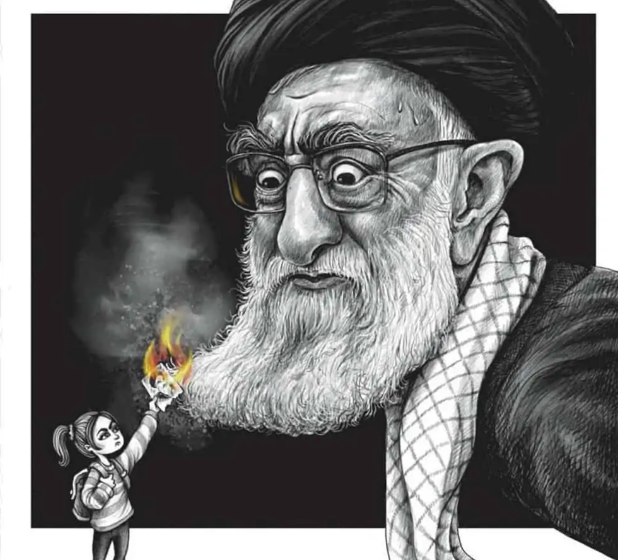
Israel launched extensive airstrikes on Iran last night, targeting over 100 sites, including the Natanz nuclear enrichment facility, the Islamic Revolutionary Guard Corps headquarters, and residential compounds, killing Iran’s top three military officials, two nuclear scientists, and at least 12 civilians in Tehran. Prime Minister Benjamin Netanyahu described the operation as aimed at dismantling Iran’s ballistic missile program, with strikes continuing into the afternoon and potentially marking the start of a prolonged campaign. Iran’s Supreme Leader, Ayatollah Ali Khamenei, vowed a “harsh” response, launching 100 drones at Israel, though no significant damage was reported. The U.S. denied involvement but evacuated nonessential embassy staff in Baghdad amid fears of a wider conflict. Iran suspended planned nuclear talks with the U.S.. At the same time, analysts suggest its weakened regional proxies and damaged military capabilities limit its retaliation options, potentially escalating tensions further in the Middle East.

“The best defense is a good offense.”  – Jack Dempsey
Have a great weekend,
PW

Bitcoin on the Balance Sheet

Dear valued client,
Markets gained more ground this week as several key companies reported their Q1 earnings. Nvidia, for instance, reported a robust financial performance, posting a $18.8 billion profit, up 26% year-over-year, despite U.S. restrictions barring chip sales to China, a major global market. CEO Jensen Huang remains optimistic, forecasting $45 billion in revenue for the next quarter. Highlighting China’s significant AI research community, Huang noted that U.S. export controls may inadvertently bolster Chinese chipmakers by shielding them from American competition. Yet, Nvidia continues to thrive globally, underscoring its resilience and strong market position.
A federal appeals court has temporarily paused a ruling by the Court of International Trade, which found that President Trump lacked the authority to impose his sweeping “Liberation Day” tariffs of 10% or more on nearly all foreign goods, as well as additional duties on Canadian and Mexican imports, under the International Emergency Economic Powers Act (IEEPA). While the White House considers appealing to the Supreme Court, trade officials downplay the decision as a minor setback, asserting that Trump has alternative legal tools, such as imposing tariffs of up to 15% for 150 days under federal law, using Section 232 for national security-based tariffs on industries like steel and vehicles, or leveraging Section 301 to target countries for unfair trade practices, as done with China previously. However, the uncertainty surrounding these tariffs may lead key trading partners, like the EU and Japan, to adopt a cautious approach in ongoing high-stakes trade negotiations with the U.S.
Publicly traded companies are increasingly investing in bitcoin, with 114 firms now holding the cryptocurrency, up from 89 in April, driven by a nearly 50% price surge from $75,000 to a record high of nearly $112,000. Notable recent moves include GameStop’s $500 million bitcoin purchase and Trump Media’s $2.5 billion raise to build a bitcoin treasury. This trend follows the lead of Strategy (formerly MicroStrategy), which holds over 580,000 bitcoins worth more than $62 billion, transforming itself into a bitcoin-centric investment vehicle and seeing its stock soar 500% last year. However, Strategy’s valuation at 1.6 times its bitcoin holdings raises concerns about potential risks if market conditions shift. Enthusiasm for bitcoin persists, bolstered by its limited supply and supportive signals from the White House, with Vice President JD Vance advocating for reduced crypto regulations and stablecoin trading at the 2025 Bitcoin Conference.

A Bank of Canada report highlights a significant shift in the country’s labor force, noting a nearly 10% decline in the share of native-born workers from 77.6% in 2006 to 68.1% in 2024, driven by a surge in low-wage, temporary migrant workers. Since 2022, Canada has accepted over one million newcomers annually, primarily non-permanent residents like international students and temporary foreign workers, mostly from lower-income regions such as India, sub-Saharan Africa, and the Middle East. These workers, younger and lower-skilled than past immigrants, face a widening wage gap, earning 22.6% less than Canadian-born workers in 2024, compared to 9.5% before 2014. This unprecedented immigration surge, which tripled U.S. population growth rates between 2019 and 2023, coincides with negligible net births and a sharp rise in youth unemployment, particularly in retail and food services, where temporary foreign worker employment in restaurants surged by 634% from 2016 to 2023. The report suggests that the influx of low-skilled labor may be contributing to Canada’s declining productivity and per-capita GDP, potentially supporting uncompetitive businesses while depressing wages.

“Well, bitcoin is a currency. Bitcoin has no underlying rate of return. You know, bonds have an interest coupon. Stocks have earnings and dividends. Gold has nothing, and bitcoin has nothing. There is nothing to support the bitcoin except the hope that you will sell it to somebody for more than you paid for it.”  – John C. Bogle

“Bitcoin is a swarm of cyber hornets serving the goddess of wisdom, feeding on the fire of truth, exponentially growing ever smarter, faster, and stronger behind a wall of encrypted energy.”  – Michael J. Saylor

Have a great weekend,

PW

Indigne du AAA

Cher client,

Les marchés ont perdu une partie des gains considérables enregistrés la semaine dernière alors que le taux d’inflation au Canada est tombé à 1,7 % en avril (contre 2,3 % en mars et 2,6 % en février), en grande partie grâce à l’élimination de la taxe carbone et à la baisse des prix de l’énergie. L’essence et le gaz naturel ont chuté respectivement de 18,1 % et de 14,1 % en glissement annuel, en raison de l’augmentation de l’offre de l’OPEP. Toutefois, les mesures de l’inflation de base, que la Banque du Canada surveille de près, continuent d’augmenter. Malgré un taux de chômage en hausse à 6,9 % en raison de l’impact des tarifs douaniers sur le secteur manufacturier, ces chiffres élevés de l’inflation de base pourraient inciter la Banque du Canada à suspendre les réductions de taux lors de sa réunion du 4 juin, en maintenant le taux directeur à 2,75 %, afin d’équilibrer la croissance économique et le contrôle de l’inflation. 
Les rapports sur les bénéfices de Home Depot et de Target présentent deux images différentes de l’économie et des priorités des consommateurs. Les résultats de Home Depot pour le premier trimestre ont montré une certaine résilience, avec un chiffre d’affaires de 39,9 milliards de dollars, en hausse de 9,4 % d’une année sur l’autre, ce qui correspond aux attentes des analystes. La réaffirmation de ses prévisions de croissance de 3 % pour 2025 reflète la demande constante des propriétaires, soutenue par l’augmentation de la valeur nette de leur logement. En revanche, Target a enregistré une baisse de 2,8 % de ses ventes pour atteindre 23,8 milliards de dollars américains, manquant ainsi les attentes en matière de bénéfices et inversant ses perspectives pour l’année entière en annonçant une baisse des ventes à un chiffre, marquant ainsi une troisième année potentielle de baisse. Les difficultés de Target sont dues à la baisse des dépenses discrétionnaires pour des articles tels que les jouets et l’électronique. Alors que Home Depot tire profit des achats de rénovation effectués par nécessité, la dépendance de Target à l’égard des biens discrétionnaires met en évidence la prudence générale des consommateurs à revenus moyens et faibles face à l’inflation et aux incertitudes tarifaires, signalant une division de la force de consommation où les propriétaires plus aisés restent robustes, mais où les consommateurs sensibles aux prix se replient.
La Chambre des représentants des États-Unis a adopté cette semaine, par un seul vote, un projet de loi fiscal et budgétaire. Le projet de loi prévoit l’élimination de l’impôt fédéral sur le revenu pour les pourboires et la rémunération des heures supplémentaires jusqu’en 2028, afin d’augmenter le salaire net de travailleurs tels que les serveurs, les livreurs, les infirmières et les pompiers. Parmi les autres dispositions figurent l’augmentation des déductions standard pour les entreprises, une augmentation de 500 dollars du crédit d’impôt pour enfants, un compte de 1 000 dollars pour les nouveau-nés et une exonération de 15 millions de dollars de l’impôt sur les successions. Toutefois, le projet de loi devrait alourdir la dette nationale de 4 000 milliards de dollars, ajouter des exigences supplémentaires pour les bénéficiaires de Medicaid, supprimer les crédits pour l’énergie verte et mettre fin à certaines options de remboursement des prêts étudiants. Le projet de loi devra faire face à des difficultés au Sénat, puisqu’il devrait être approuvé le 4 juillet.
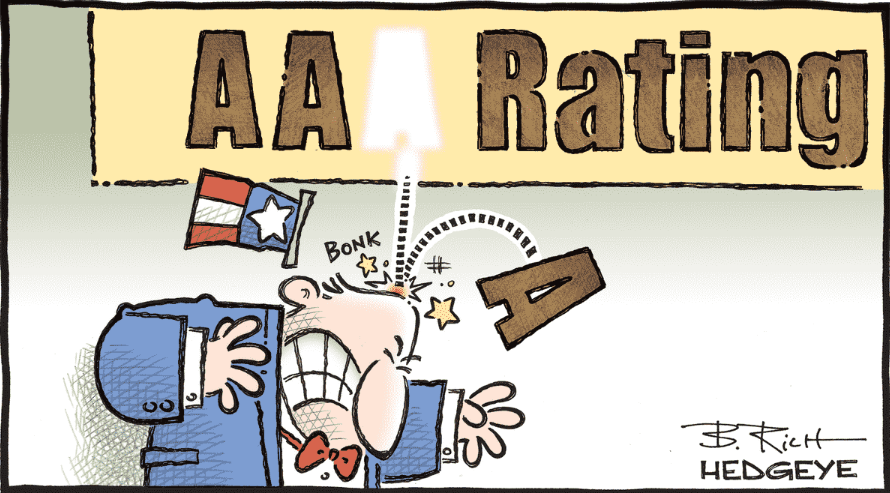
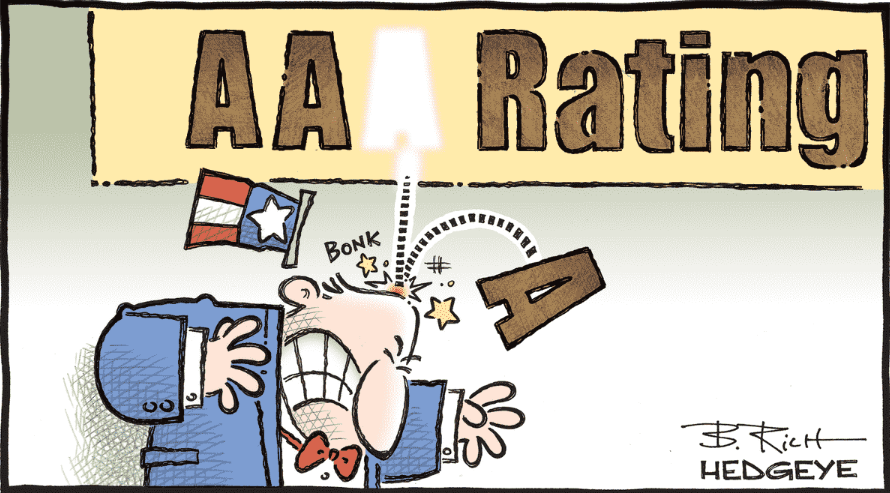
 À la fin de la semaine dernière, Moody’s a abaissé la note de crédit des États-Unis de AAA à Aa1, citant la croissance incontrôlée de la dette et l’augmentation des paiements d’intérêts, qui ont atteint 1,1 billion de dollars l’année dernière, dépassant le budget du Pentagone. Moody’s est ainsi la dernière grande agence à avoir abaissé la note des États-Unis, autrefois immaculée, après les dégradations de S&P et de Fitch en 2011 et 2023 respectivement. Bien que le secrétaire au Trésor, Scott Bessent, ait minimisé l’importance de cette dégradation, elle pourrait inciter les investisseurs à exiger des rendements plus élevés sur les bons du Trésor américain, ce qui pourrait entraîner une augmentation des coûts d’emprunt et avoir un impact sur les marchés, avec des effets d’entraînement tels qu’un dollar plus faible, une hausse continue de l’or et d’autres effets d’entraînement sur les marchés financiers mondiaux.
« Le noyau de votre vie est votre raison d’être. Tout dans votre vie, de votre régime alimentaire à votre carrière, doit être aligné sur votre raison d’être si vous voulez agir avec cohérence et intégrité dans le monde. Si vous connaissez votre raison d’être, votre désir le plus profond, alors le secret de la réussite consiste à discipliner votre vie de manière à soutenir votre raison d’être profonde et à minimiser les distractions et les détours. »  – David Deida

Passez un bon week-end,

PW

Unworthy of AAA

Dear valued client,
Markets lost some of the hefty gains from last week as Canada’s inflation rate dropped to 1.7% in April (compared to 2.3% in March and 2.6% in February), largely due to the elimination of the consumer carbon tax and declining energy prices. Gasoline and natural gas fell 18.1% and 14.1% year-over-year, respectively, amid increased OPEC supply. However, core inflation measures, which the Bank of Canada closely monitors, continue to rise. Despite a rising unemployment rate of 6.9% due to tariff impacts on manufacturing, these elevated core inflation figures may lead the Bank of Canada to pause rate cuts at its June 4th meeting, maintaining the policy rate at 2.75%, as it balances economic growth with inflation control. 
Earnings reports from Home Depot and Target paint two different pictures regarding the economy and consumer priorities. Home Depot’s Q1 earnings showed resilience with US$39.9 billion in revenue, up 9.4% year-over-year, meeting analyst expectations. Its reaffirmed 3% growth forecast for 2025 reflects steady demand from homeowners, supported by rising home equity. In contrast, Target reported a 2.8% sales decline to US$23.8 billion, missing earnings expectations and reversing its full-year outlook to a low-single-digit sales drop, marking a potential third year of declines. Target’s struggles stem from weaker discretionary spending on items like toys and electronics. While Home Depot benefits from necessity-driven home improvement purchases, Target’s reliance on discretionary goods highlights broader consumer caution among middle- and lower-income shoppers facing inflation and tariff uncertainties, signaling a split in consumer strength where wealthier homeowners remain robust, but price-sensitive consumers are pulling back.
The U.S. House passed a comprehensive tax and spending bill this week by a single vote. The bill includes eliminating federal income tax on tips and overtime pay through 2028, aiming to boost take-home pay for workers like waitstaff, delivery drivers, nurses, and firefighters. Other provisions include increased standard business deductions, a $500 child tax credit increase, a $1,000 newborn account, and a $15 million estate tax exemption. However, it is projected to add $4 trillion to the national debt, add additional requirements for Medicaid recipients, eliminate green energy credits, and end certain student loan repayment options. It will face Senate challenges as the bill targets a July 4th approval. Late last week, Moody’s downgraded the U.S. credit rating from AAA to Aa1, citing uncontrolled debt growth and rising interest payments, which reached $1.1 trillion last year, exceeding the Pentagon’s budget. This followed S&P and Fitch’s earlier downgrades in 2011 and 2023, respectively, making Moody’s the last major agency to lower the U.S.’s once-pristine rating. While Treasury Secretary Scott Bessent downplayed the downgrade, it may lead investors to demand higher yields on U.S. Treasuries, potentially increasing borrowing costs and impacting markets, with knock-on effects like a weaker dollar, a continued gold rally, and other ripple effects through global financial markets.
“The core of your life is your purpose. Everything in your life, from your diet to your career, must be aligned with your purpose if you are to act with coherence and integrity in the world. If you know your purpose, your deepest desire, then the secret to success is to discipline your life so that you support your deepest purpose and minimize distractions and detours.”  – David Deida
Have a great weekend,
PW

Embrace Possibility Thinking

Dear valued client,
Markets closed out their second best week of the year as inflation in the U.S. dropped to 2.3% in April (compared to 2.4% in March and 2.8% in February), coming in below expectations and driven mostly by energy prices falling 3.7%. Walmart, on the other hand, expressed more caution in their earnings report this week announcing it will raise prices on some products due to increased supplier costs from tariffs, despite a temporary reduction on Chinese goods from 145% to 30%. The price hikes, expected to begin by late May and continue through the summer, will likely affect electronics and household goods rather than groceries, which account for 60% of Walmart’s revenue. The European Union is navigating complex challenges in supporting Ukraine while advancing its own defense autonomy. Starting June 6, 2025, the EU will impose higher tariffs on Ukrainian exports, particularly agricultural products, in response to pressure from farmers in member states like Poland, straining Ukraine’s wartime economy. Simultaneously, the EU is pushing for greater self-reliance in defense amid uncertainties over U.S. commitment and ongoing Russian aggression. The European Commission has proposed borrowing $167 billion against the EU budget to purchase European-made weapons, aiming to reduce reliance on American arms, while French President Emmanuel Macron has floated the idea of stationing French nuclear weapons in other EU countries, under strict conditions. These developments highlight the EU’s struggle to balance support for Ukraine, internal political pressures, and the long-term goal of a unified European defense strategy.
During President Donald Trump’s Middle East tour this week, Saudi Arabia pledged a $1 trillion investment in the U.S., including a $142 billion defense pact. Trump also announced the lifting of U.S. sanctions on Syria following the overthrow of Bashar al-Assad’s regime, a move celebrated in Damascus as a historic opportunity for rebuilding a nation devastated by a 14-year civil war that cost $800 billion in lost GDP. The sanctions relief, which still requires Congressional approval for some measures, aims to enable nations like Saudi Arabia, Qatar, and Turkey to fund Syria’s reconstruction, estimated to cost hundreds of billions. However, Syria’s new president, Ahmed al-Sharaa, faces significant challenges, including sectarian tensions, the integration of militias into a national security force, and managing competing influences from foreign powers like Saudi Arabia, Turkey, and Israel, which could complicate the country’s path to stability.
“Big thinkers are specialists in creating positive forward-looking, optimistic pictures in their own minds and in the minds of others. If you embrace possibility thinking, your dreams will go from molehill to mountain size, and because you believe in possibilities, you put yourself in position to achieve them.”  – John C. Maxwell

Have a great weekend,

PW

Homage to the Oracle of Omaha

Dear valued client,
Markets lost marginal ground this week as the U.S. Federal Reserve maintained its key interest rate at 4.25%–4.5% on Wednesday for the third consecutive time, amidst significant economic uncertainty driven by global trade. Despite a robust economy evidenced by recent employment and spending growth, Powell noted a record-low consumer optimism due to anticipated tariff impacts. Powell has emphasized a cautious approach, stating the Fed can afford to wait for clearer data before adjusting policy.President Donald Trump and UK Prime Minister Keir Starmer announced a trade deal on Thursday that reduces U.S. tariffs on UK cars, Rolls-Royce engines, and plane parts while granting the U.S. greater access to British markets for beef, poultry, ethanol, and cereals. The agreement, which allows the UK to export 100,000 cars to the U.S. at a 10% tariff rate instead of 27.5% and eliminates tariffs on certain UK steel and aluminum, marks a significant win for Starmer’s Labour government, achieving what the UK Conservative Party could not in 14 years. However, the deal’s scope is limited, with many UK goods still subject to the U.S.’s blanket 10% tariff, and details on sectors like pharmaceuticals, quantum computing, and the UK’s digital services tax remain unclear. While the deal bolsters Brexiteers’ arguments and benefits luxury UK carmakers and U.S. meat exporters, its economic impact on the U.S. is likely modest, given the UK accounts for just 2.9% of American trade.
In an effort to ease trade tensions, U.S. Treasury Secretary Scott Bessent and Trade Representative Jamieson Greer will meet with Chinese counterparts in Geneva this weekend, marking the first high-level trade talks since President Donald Trump imposed 145% tariffs on Chinese goods and China retaliated with 125% duties. Trump hinted at possibly lowering tariffs to sustain business with China, but Beijing insists on the cancellation of U.S. tariffs as a precondition for talks, framing the U.S. as coercive. The trade war has already caused significant economic fallout, with China’s U.S. exports dropping 21% in April and American retailers warning of holiday shortages and price hikes. Both sides have clear objectives: the U.S. seeks to reduce China’s trade surplus and address unfair practices like industrial subsidies and IP theft, while China aims to lower tariffs without restructuring its economic model. Experts suggest the talks are exploratory, with progress hinging on whether future meetings are planned, as Beijing remains resolute against appearing to yield to U.S. pressure.
On Wednesday, India conducted airstrikes on nine alleged militant sites in Pakistan and Pakistani-administered Kashmir, killing at least 26 people according to India and 31 according to Pakistan, in retaliation for an attack last month in Indian-controlled Kashmir that killed 26 civilians. Pakistan, denying involvement in the initial attack, labeled the strikes an “act of war” and vowed a military response, escalating tensions between the two nuclear-armed neighbors. The conflict, rooted in a decades-long dispute over Kashmir—divided between India and Pakistan since their 1947 partition—has historically fueled multiple wars and skirmishes, including the 1965 and 1971 conflicts and the 1999 Kargil War. Despite international calls for restraint from the U.S., China, and others, both nations’ defiant rhetoric and Pakistan’s promise of a “tit-for-tat” response raise fears of further escalation. However, analysts suggest the skirmish may subside as neither country has the economic or political appetite for sustained conflict, given their nuclear capabilities and lack of military dominance.

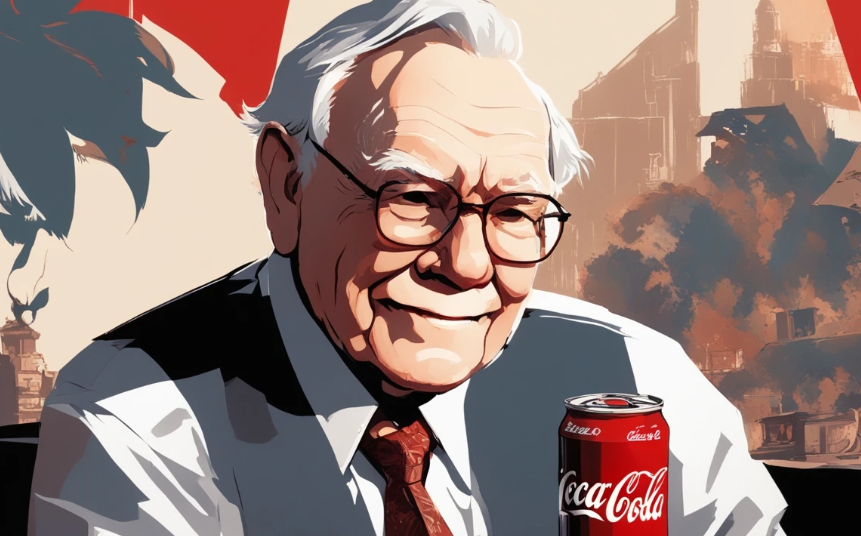
Warren Buffett, the legendary investor, announced his retirement as CEO of Berkshire Hathaway by year-end at the company’s annual shareholders meeting in Omaha, concluding a remarkable 60-year tenure that transformed a failing textile company into a $1.1 trillion conglomerate. Since taking control in 1965, Buffett’s value investing philosophy—emphasizing patience and undervalued assets—has driven Berkshire’s stock to a 19.9% annualized return, nearly doubling the S&P 500’s 10.4%, with investments in companies like Geico, Coca-Cola, and Apple, and a current cash reserve of $350 billion. His success, yielding outsized returns even if Berkshire’s stock fell 99%, has cemented his status as the “investing GOAT,” inspiring millions. Buffett’s successor, Greg Abel, will now navigate deploying this massive capital amid recent challenges in finding attractive investments, while Buffett plans to remain involved in an advisory capacity. 

“The stock market is designed to transfer money from the active to the patient.”  – Warren Buffett
Have a great weekend,
PW

A ‘Critical’ Week for Ukraine

Dear valued client,
Markets made significant gains this week as the U.S. Bureau of Labor Statistics reported a robust addition of 177,000 jobs, surpassing economists’ expectations of 133,000. Despite ongoing international trade disputes, the unemployment rate held steady at 4.2%, aligning with estimates and the prior month. Corporate leaders, cautious due to tariff-related concerns, are adopting a conservative approach to investment and hiring, avoiding significant layoffs but allowing workforces to shrink gradually through natural attrition, reflecting a cautious optimism in the face of economic challenges.
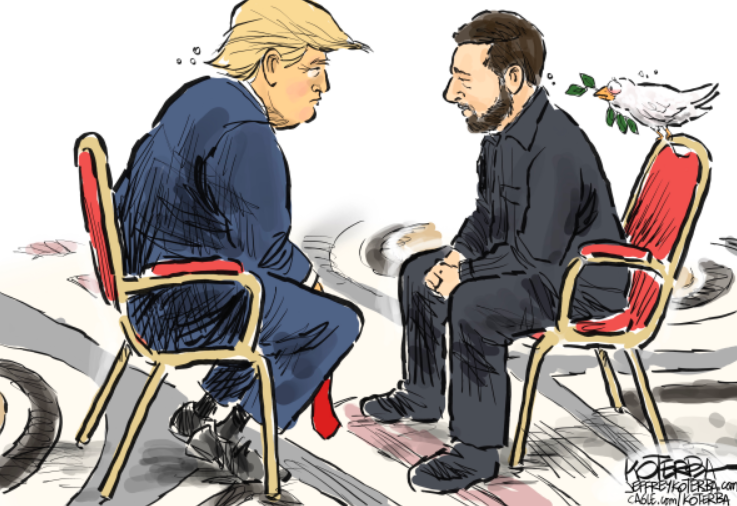
This week marks a pivotal moment for Ukraine, with Vladimir Putin proposing a three-day ceasefire starting May 8. Ukraine finds optimism in Russia’s faltering wartime economy — Goldman Sachs reports Russia’s growth has plummeted below zero — and in its advancing domestic drone production.Meanwhile, the U.S. and Ukraine have finalized a landmark minerals deal, a significant “economic partnership agreement” that grants the U.S. access to Ukraine’s valuable rare earth minerals, critical for electric vehicle batteries and military technology, while establishing a joint investment fund for minerals, oil, and gas development. Signed after months of contentious negotiations, the deal ensures a 50/50 profit split, with future U.S. military aid counted as part of Washington’s investment, though it does not reimburse the $120 billion in prior aid. Ukrainian President Volodymyr Zelensky views the agreement as a strategic move to secure ongoing U.S. support, giving Washington a vested interest in a peaceful, sovereign Ukraine, which could deter President Trump from halting defense aid. Trump, who championed the deal as a way for Ukraine to offset U.S. assistance, emphasized its role in keeping “bad actors” out, signaling a long-term U.S. commitment. While Ukraine’s parliament must still ratify the deal, the agreement strengthens Kyiv’s position by ensuring continued Western investment.
According to the Department of Commerce, the U.S. economy contracted by 0.3% in Q1 of 2025, marking its first decline since 2022. This unexpected shrinkage, against economists’ predictions of a 0.4% increase, was largely driven by a 41% surge in imports as companies stockpiled goods ahead of President Trump’s tariffs, which negatively impact GDP calculations. Consumer spending grew modestly by 1.8%, the weakest in two years, though March saw a spike in big-ticket purchases like cars. This complex economic picture complicates the Federal Reserve’s upcoming decisions on inflation and labor market policies.
Mark Carney’s Liberal Party secured a stunning victory in Canada’s election, winning 168 of 338 parliamentary seats, just shy of the 172 needed for a majority. Facing U.S. President Donald Trump’s trade war and provocative rhetoric, Carney capitalized on a surge of Canadian nationalism. While the Conservatives gained 144 seats, the NDP and Bloc Québécois saw significant losses. Carney’s minority government will likely seek ad hoc support from the NDP or Bloc Québécois to govern, with his primary challenge being to negotiate tariff-free access to the U.S. market in a looming showdown with Trump.

“Without economic power, we are weaker in terms of national security. No great military power has ever remained so without great economic power.”  – Jon Meacham

Have a great weekend,
PW

Potential Google Break-Up

Dear valued client,
Markets made significant gains this week as trade deals are materializing and tariff reduction is on the horizon. More on that below.
Amid global trade tensions, China is attempting to influence Japan to jointly oppose U.S. tariffs, with Chinese Premier Li Qiang urging Japanese Prime Minister Shigeru Ishiba to “fight protectionism together.” However, Japan, wary of China despite it being its largest trading partner, is prioritizing trade talks with the United States. With Japan’s national security concerns and a critical election looming in July 2025, Tokyo is focused on securing a deal with Washington. China’s overture, seen as a strategic move amid strained U.S. relations, will likely be met with skepticism in Japan, underscoring the complex interplay of economic and geopolitical priorities in the U.S.-China trade war.In an attempt to stabilize financial markets and entice President Xi to the negotiating table, Trump has hinted at a potential de-escalation in the U.S.-China trade war, suggesting that tariffs on Chinese imports could “come down substantially.” Reports indicate the administration is considering reducing the 145% tariff on non-security-related Chinese goods to 35% and lowering the overall rate to 50%, though Treasury Secretary Scott Bessent emphasized that any reductions would require reciprocal actions from China. While negotiations with China have not yet begun, Bessent expressed optimism about reaching a “big deal” that would be favorable for both countries. 
Tesla’s first-quarter earnings revealed a 71% plunge in net income and a 9% revenue drop, driven by a 13% decline in vehicle deliveries, intensified competition from Chinese EV makers like BYD, supply chain disruptions, and political backlash against CEO Elon Musk. The company’s stock, already down 41% year-to-date, surged 5% in after-hours trading after Musk announced he would significantly reduce his involvement with DOGE and refocus on Tesla starting next month. However, concerns persist that Musk’s renewed commitment may be too late, with early investor Ross Gerber suggesting a CEO change could be necessary. Tesla also faces potential demand impacts from Trump’s tariffs, alongside plans for a robotaxi rollout and a more affordable model.
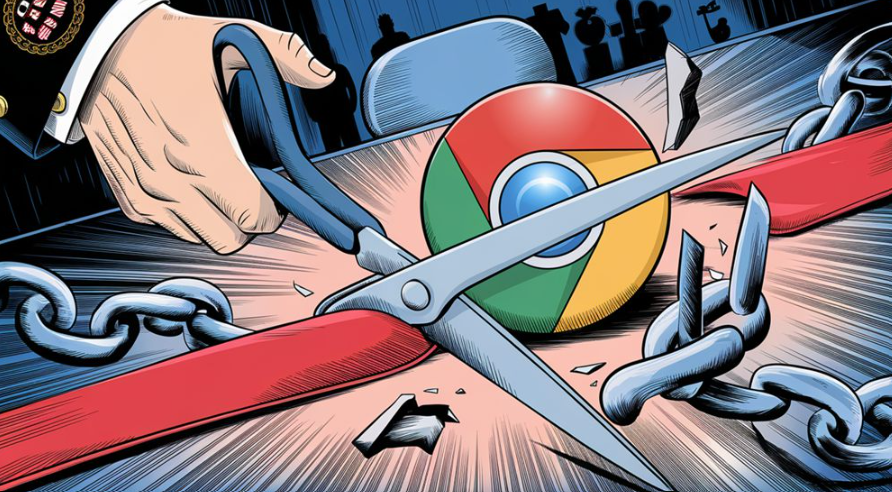
Google faces significant challenges from two U.S. antitrust rulings that found the company illegally monopolized the search and adtech markets, potentially threatening its dominance and raising the possibility of asset divestitures, such as its Chrome browser. Despite the $264 billion spent on Google’s advertising platforms like YouTube and search last year, many marketers are not celebrating the prospect of a breakup. Competitors in the adtech space are the primary advocates for dismantling Google, while chief marketing officers (CMOs) remain largely indifferent, prioritizing immediate concerns like a potential recession, tariffs, and budget cuts over the uncertain fallout of a breakup. Marketers continue to rely on Google’s vast audiences and effective ads, viewing them as indispensable despite desires for greater transparency, with alternatives still unable to match Google’s reach and impact.
Pope Francis, born Jorge Mario Bergoglio, died at 88 on Monday in the Vatican, hours after greeting Easter crowds following a severe bout of pneumonia. The first Jesuit and Latin American pope, known as the “people’s pope,” championed progressive causes, including creating a haven for the homeless and advocating for migrants. The Vatican now prepares for his funeral and a conclave to choose his successor.
“Competition is always a good thing. It forces us to do our best. A monopoly renders people complacent and satisfied with mediocrity.”  – Nancy Pearcey
Have a great weekend,
PW

Trade Deal Harbinger

Dear valued client,
Markets remained choppy this shorter week while investors wait for clarity on trade policy. 
The Bank of Canada maintained its interest rate at 2.75% amid uncertainty over trade disputes, which could disrupt Canadian trade and economic stability. Governor Tiff Macklem noted that while a rate cut was considered, the bank opted to hold steady to gain clarity on U.S. trade policy, prioritizing inflation control. Canadian inflation figures were also released this week, coming in at 2.3% in March (compared to 2.6% in February and 1.9% in January), driven by a 1.6% decline in gas prices, a 12% drop in airfare costs due to reduced U.S. travel, according to Statistics Canada. While Canada’s counter-tariffs on U.S. goods exerted slight upward pressure on some product categories, significant declines in travel and gasoline costs offset these effects. Food and restaurant prices rose 3.2% annually, partly due to the end of a federal tax holiday. This cooling trend and economic growth risks support expectations for a potential Bank of Canada interest rate cut from 2.75% at its upcoming decision.

As for the U.S. monetary policy, Federal Reserve Chair Jerome Powell warned this week in Chicago that proposed tariffs could complicate the Fed’s dual mandate of maintaining stable prices and low unemployment. In a recent speech, Powell noted that tariffs might lead to higher inflation and increased unemployment in the short term, creating a challenging scenario for monetary policy. The Fed will assess the economy’s distance from these goals and the time needed to achieve them before deciding on interest rate adjustments, with further clarity needed before acting.

Japan and Italy are engaging in trade negotiations with the Trump administration to mitigate the impact of the proposed “reciprocal tariffs.” Japan, led by Economic Revitalization Minister Ryosei Akazawa, aims to reduce tariffs to zero, leveraging its status as a key U.S. ally and major investor despite a longstanding trade surplus that irks Trump. The 25% global tariff on cars and steel, alongside a 24% levy on Japan, threatens its economy, but talks have shown “big progress,” with further discussions planned. Meanwhile, Italian Prime Minister Giorgia Meloni, whose export-driven nation faces a 20% EU tariff, seeks to use her alignment with Trump on social issues to secure favorable terms. These talks test Trump’s deal-making approach and could shape broader US trade relations, potentially isolating China while influencing EU unity.
Trump has also temporarily exempted key tech products, including smartphones, laptops, and semiconductors, from his proposed 145% tariffs on Chinese goods, providing imminent clarity for tech companies and consumers. Announced late Friday, this decision, detailed in a US Customs list and a presidential memorandum, spares approximately $100 billion in Chinese imports from the reciprocal tariffs, though a 20% tariff on Chinese goods and a 10% blanket tariff on all U.S. imports remain. Commerce Secretary Howard Lutnick emphasized that these exemptions are not permanent, with new semiconductor tariffs expected within months, signaling that further details on the U.S.-China trade approach will soon emerge, particularly following Trump’s promised Monday update on the semiconductor industry.
Nvidia, the global leader in semiconductor production, announced plans to manufacture its AI supercomputers entirely in the U.S., marking a significant shift driven by looming tariffs on foreign-made chips. The company aims to invest up to $500 billion over four years, with production of its Blackwell chips already underway at TSMC’s Arizona plants and set to expand at Wistron and Foxconn facilities in Texas. Hailed by the White House as part of President Trump’s push for an “American manufacturing renaissance,” this move contrasts with challenges faced by companies like Apple, where reshoring is costly and hindered by a U.S. workforce less skilled in mass production. While supported by unions like the Teamsters for boosting domestic jobs, public sentiment remains mixed. 
Sudan’s civil war, marking its second year, has reached a devastating milestone, with over 150,000 deaths, 13 million displaced, and reports of genocide, famine, and widespread rape as weapons of war. The conflict, pitting the Sudanese Armed Forces (SAF) led by Gen. Abdel Fattah al-Burhan against the Rapid Support Forces (RSF) under Gen. Mohamed Hamdan Dagalo, has intensified, with the RSF launching a brutal offensive in el-Fasher, Darfur, targeting refugee camps and aiming to seize the last SAF-controlled state capital. Despite SAF regaining Khartoum, foreign-backed weapons fuel the ongoing violence, and global focus on other conflicts like Ukraine and Gaza has sidelined Sudan. The UK’s recent hosting of 20 countries in London to restart peace talks underscores the urgent need for international action to address this overlooked crisis.
“Our wishes are presentiments of the abilities that lie in us, harbingers of what we will be able to accomplish.”  – Goethe
Have a great weekend,
PW

(Chinese) Empire Strikes Back

Dear valued client,
Markets gained significant ground this week with its best single-day performance since 2008 on Wednesday after the White House announced a 90-day reciprocal tariff pause. The U.S. also released encouraging inflation figures for the month of March, coming in at 2.4% (compared to 2.8% in February and 3% in January), the lowest it’s been since September 2024. 
On the geopolitical front, U.S. and Iranian negotiators will meet in Oman this Saturday to discuss Iran’s nuclear program, marking a shift from past talks typically conducted through intermediaries. President Donald Trump described the discussions as “direct” and involving “very high-level” officials, though Iran’s Foreign Minister Abbas Araghchi clarified that the two sides would remain in separate rooms, with Omani diplomats facilitating communication. Trump emphasized the stakes, warning that Iran faces “great danger” if the talks fail, as he insists Iran must not acquire nuclear weapons. While a breakthrough seems unlikely, the talks signal mutual interest in exploring a potential deal. Adding to the diplomatic momentum, leaders of four major Iran-backed militias in Iraq, under pressure from looming U.S. air strikes, expressed readiness to surrender their weapons to Iraqi authorities, a move possibly influenced by the Iran Revolutionary Guard Corps’ willingness to let local commanders decide. Though likely a tactical retreat, this could hand Trump a foreign-policy win without military action.
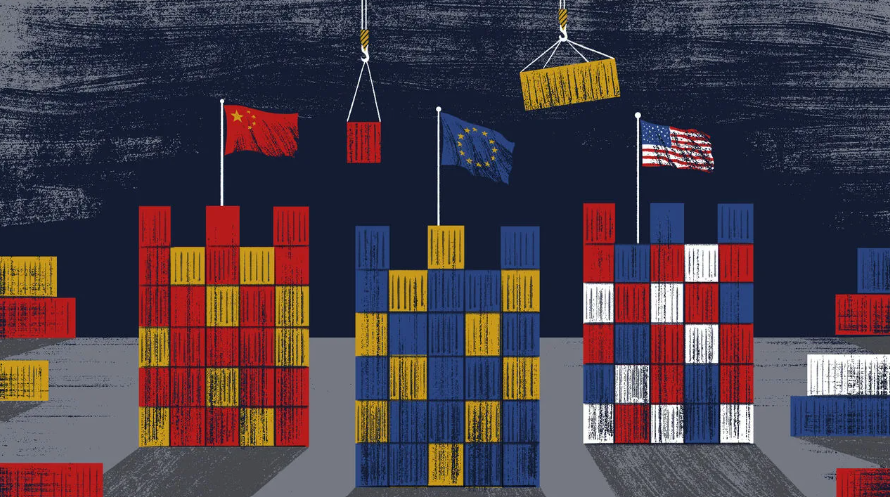
President Donald Trump’s recent trade policies have sparked opportunities and challenges for the U.S. economy. By pausing most “reciprocal” tariffs for 90 days with a 10% baseline duty, Trump has provided breathing room for many U.S. trading partners, fostering a market rally and signaling flexibility. However, his decision to raise tariffs on Chinese imports to 145% has intensified the U.S.-China trade dispute, prompting China to counter with an 84% tariff, later increased to 125%. These escalating levies have disrupted trans-Pacific trade, with U.S. firms like Amazon canceling orders and Chinese companies idling workers, while also raising concerns about potential price increases despite recent easing in U.S. inflation. Yet, this shake-up is encouraging American businesses to explore new supply chains and innovate, potentially strengthening domestic industries. While markets have faced volatility, Trump remains optimistic about long-term growth, suggesting the U.S. could emerge more competitive if it navigates these disruptions effectively.
I’ve included two commentaries below to provide a balanced perspective of the tariff situation:
Several Wall Street bigwigs voiced strong concerns over President Trump’s recent tariff hikes as markets remain uncertain and volatile. JPMorgan CEO Jamie Dimon warned that tariffs could stall growth and hinted at an overvalued stock market amid rising recession risks, while BlackRock’s Larry Fink argued they’d fuel inflation and keep interest rates high, noting many CEOs already see a recession underway. Billionaire Stanley Druckenmiller opposed tariffs exceeding 10%, and even Trump ally Bill Ackman called for a 90-day tariff pause, citing potential damage to U.S. business credibility and a possible “self-induced economic nuclear winter.” Trump heeded the advice. Investors do not like uncertainty, and the flip-flopping on economic policy makes it difficult to provide the market with long-term direction. 
Conversely, hedge fund investor Steve Eisman (played by Steve Carell in ‘The Big Short’) has a more bullish outlook on Trump’s tariff strategy. He argues that the U.S. is well-positioned to prevail due to its economic structure. He highlights that exports make up just 11% of U.S. GDP – far less than the 30% for the EU or 35% for Mexico and Canada, with the latter two heavily reliant on U.S. markets – giving the U.S. a leverage advantage in tariff disputes. Eisman believes this disparity, combined with strengths like full employment, energy independence, and a services-based economy, means the U.S. would suffer less than rivals like China in a prolonged trade war, potentially forcing concessions from nations with weaker bargaining power. While acknowledging market volatility and recession risks tied to Trump’s tariffs, he dismisses threats to the dollar’s dominance and views Trump’s consistent aggression as a strategic edge, a shift from his earlier doubts about U.S.-China trade tensions in 2019.
Time will tell how this all plays out. 
“There is an iron law in economics: extremely good and extremely bad circumstances rarely stay that way for long because supply and demand adapt in hard-to-predict ways.”  – Morgan Housel
Have a great weekend,
PW

Consultation de livre

Call Now Button