Turmoil in Turkey

Dear valued client,
Markets started the week off strong, only to fall in the red today with worries of higher inflation in the future. More on that below. 
President Trump announced a 25% tariff on countries purchasing Venezuelan oil and gas, as well as a separate 25% import tax on all cars not manufactured in the United States, aiming to boost domestic production. The Venezuelan oil tariff targets nations trading with Venezuela, while the car tariff builds on existing levies, potentially raising prices and straining U.S. auto industry supply chains linked to Canada and Mexico. Trump hinted at additional industry-specific tariffs, including pharmaceuticals, and possible reciprocal tariffs starting the same day, though exemptions and flexibility for certain countries remain under consideration. This ‘tariff strategy’ aims to bring business, manufacturing, and working-class jobs back to the United States. Time will tell whether or not this strategy achieves its intended aim and helps Trump’s approval ratings. The 2026 midterm elections will be here before we know it.
Following negotiations in Saudi Arabia, the White House announced on Thursday that Ukraine and Russia have agreed to a ceasefire in the Black Sea, halting the use of force in the region. Ukrainian President Volodymyr Zelensky confirmed Ukraine’s commitment to the deal but voiced doubts about Russia’s willingness to comply. The Kremlin stated that Russia will not implement the ceasefire until sanctions on its banks are lifted — a condition requiring European Union approval. President Trump suggested Russia might be intentionally delaying as a strategic move, and although the Black Sea agreement marks progress, talks for a broader ceasefire remain ongoing.
German software giant SAP surpassed Danish pharmaceutical company Novo Nordisk to become Europe’s most valuable public company, reaching a market value of €312 billion ($338 billion). SAP’s stock has surged 40% over the past year, driven by its shift from traditional licensed software to cloud-based subscription services and AI innovations, boosting Germany’s market in the process. Meanwhile, Novo Nordisk, previously a contender for the top spot alongside luxury group LVMH, saw its stock drop 40% over the same period as investors question the sustainability of its success with weight-loss drugs Ozempic and Wegovy, lacking a clear next-generation successor.
For the past week, tens of thousands of people have protested nightly in Istanbul following the arrest of their popular mayor, Ekrem Imamoglu, a key rival to Turkish President Recep Tayyip Erdogan, sparking Turkey’s largest demonstrations in over a decade. Imamoglu, who faces corruption charges widely condemned as politically motivated, was detained last Wednesday in a raid by dozens of police officers, with at least 1,100 protesters detained nationwide as unrest spread beyond Istanbul to conservative regions. Erdogan, who has tightened his grip on power over 22 years — purging dissent after a 2016 coup attempt — views Imamoglu as a significant threat due to his broad appeal and victories in Istanbul’s mayoral races in 2019 and beyond, positioning him as a frontrunner for the presidency. The arrest, timed just before Imamoglu’s expected nomination as the CHP opposition candidate for the 2028 election, has backfired, with 15 million supporting him in primaries and markets reacting harshly. So far there’s been a muted international response from the U.S. and Europe, preoccupied with their own geopolitical concerns.

Canadian Governor General Mary Simon dissolved Parliament at the request of Liberal Leader Mark Carney, triggering a snap federal election set for April 28, just 36 days later — the shortest campaign period allowed under Canadian law. The election, pitting Carney against Conservative Leader Pierre Poilievre, unfolds amid heightened tensions with the United States. Polls show a tight race as voters weigh which leader is best equipped to deal with Trump alongside lingering domestic concerns like housing and the cost of living.
“Leadership is not about the next election, it’s about the next generation.”  – Simon Sinek
Have a great weekend,
PW
Tariff U-Turn

Dear valued client,
Markets are on track to lose ground this week amid forthcoming economic uncertainty. More on that below.Ukrainian President Volodymyr Zelensky is set to visit Washington, DC. to sign a minerals agreement with the United States, signaling a step toward peace amid ongoing tensions. This deal, which grants the U.S. access to Ukraine’s valuable rare earth metals, titanium, and lithium, follows a framework agreed upon by both nations, though it lacks explicit security guarantees, offering instead U.S. support for Ukraine’s pursuit of lasting peace. Despite diplomatic friction with European allies over UN resolutions marking the war’s third anniversary—where the U.S. favored neutral language over condemning Russia—the Trump administration appears poised to tie continued military aid to this mineral access, hinting at a broader negotiation. Zelensky, while pushing for better financial terms and firm security commitments, has expressed openness to stepping down if it secures peace or NATO membership for Ukraine, raising hopes that this visit could pave the way for a resolution to the conflict.
With potential peace on the horizon after three years of war that prompted a mass exodus of American companies, President Vladimir Putin is now signaling a desire to lure them back, touting opportunities in critical minerals mining, aluminum production, and titanium supplies, as highlighted in discussions with President Trump this week. However, experts caution that the political risks, shaky rule of law, and past losses—totaling $324 billion for U.S. firms since their 2022 withdrawal—make a return unlikely for many. Companies like ExxonMobil and Carlsberg, burned by asset seizures, and major players like Amazon, Apple, and McDonald’s, which severed ties, face a wary path forward, especially as local Russian producers have filled gaps left by Western exits. With Russia accounting for less than 1% of most multinationals’ pre-war revenues and its economy struggling, the potential rewards may not outweigh the hazards, leaving a full corporate comeback in doubt.
Apple announced a $500 billion investment plan to invigorate the U.S. economy over the next four years, focusing on advanced manufacturing and technology. The company will double its Advanced Manufacturing Fund to $10 billion to support domestic semiconductor production, including at Taiwan Semiconductor’s new Arizona plant, where Apple chip manufacturing kicked off last month, and will shift assembly of servers for its AI product, Apple Intelligence, to Houston from overseas. Additionally, Apple is launching a training academy in Detroit to help businesses adopt AI and upskill manufacturing workers while committing to hiring 20,000 U.S. employees for roles in research, semiconductor engineering, and AI development. The announcement, following CEO Tim Cook’s recent meeting with President Trump, dovetails with Trump’s economic priorities—especially as new tariffs, like a 10% duty on Chinese imports and a proposed 25% semiconductor tariff, threaten Apple’s margins—though analysts debate how much White House influence reshaped the plan.

Nvidia’s latest earnings report highlighted the enduring strength of the AI boom, with quarterly revenue soaring 78% to $39.3 billion and data center revenue—key to AI computing—nearly doubling to $35.6 billion, driven by robust demand for its new Blackwell chip series, which accounted for 28% of sales despite early production hiccups. The results, a relief after a 17% stock drop in January triggered by China’s DeepSeek unveiling a low-cost, open-source AI model, reaffirmed Nvidia’s pivotal role in powering AI, with CEO Jensen Huang dismissing overhype concerns. While the company outperformed Wall Street’s sales and profit forecasts, the earnings didn’t match the blockbuster highs of the past two years, leading to a slight dip in after-hours trading as investors tempered expectations. Nvidia’s performance, which fueled 22% of the S&P’s 2024 gains, remains a critical barometer for the AI sector, though future uncertainties loom, including potential US trade restrictions on China exports and the sustainability of massive data center investments by clients like Alphabet, Meta, and Amazon.
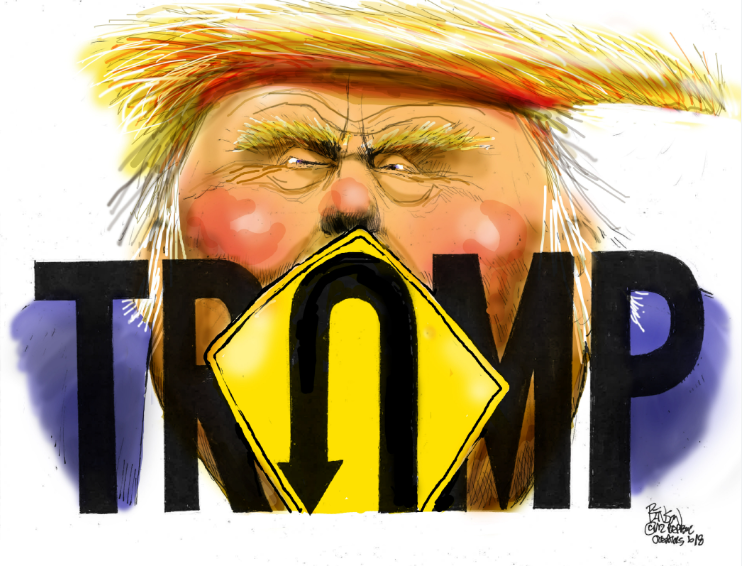
In a sharp U-turn, President Trump has confirmed that a 25% tariff on imports from Mexico and Canada will take effect on March 4, 2025, alongside an additional 10% tariff on Chinese goods, on top of an existing 10% duty. Initially paused earlier this month to address border security concerns—prompting Canada to appoint a “fentanyl czar” and Mexico to deploy 10,000 National Guard members to the U.S.–Mexico border—these measures failed to avert a broader trade conflict. Canadian energy products, such as oil and electricity, will face a reduced 10% tariff, while a separate 25% tariff on all steel and aluminum imports is set for March 12, affecting the U.S., which relies heavily on Canada for these materials. Trump’s tariff announcements, including a forthcoming reciprocal tariff plan expected on April 2, are already causing economic ripples: Canada’s election landscape is shifting as tariffs threaten its economy, while in the U.S., consumer sentiment and markets are declining, with businesses bracing for the impact on over $1 trillion in imports.

“Uncertainty actually is the friend of the buyer of long-term values.”  – Warren Buffett
Have a good weekend,
PW

Car Trouble

Dear valued client,
2025 got off to a slow start as markets slid about half a percentage point. 

Early Wednesday, a horrific incident unfolded on New Orleans’ Bourbon Street where a driver, identified as 42-year-old Army veteran Shamsud-Din Jabbar, drove a pickup truck into a crowd celebrating New Year’s Eve. Jabbar then engaged in a shootout with police, wearing body armor and wielding a weapon, which resulted in him being fatally shot. The attack left at least 15 people dead and over 35 injured. Jabbar had a minor criminal history with arrests for theft and driving with an invalid license. He had worked at major consultancies Deloitte and Accenture after obtaining an IT degree from Georgia State University. The scene was also marked by the presence of apparent explosive devices and an ISIS flag in the truck, leading the FBI to treat the incident as a terrorist attack, suspecting Jabbar had accomplices. This event led to the postponement of the Sugar Bowl game between Notre Dame and the University of Georgia by 24 hours.
Also on Wednesday, a Tesla Cybertruck exploded outside the Trump International Hotel in Las Vegas, resulting in the death of the person inside the vehicle and injuries to seven others nearby. The vehicle was found to contain gasoline canisters, fuel canisters, and large mortar fireworks. Las Vegas Metropolitan Police Department Sheriff Kevin McMahill confirmed that they knew who rented the truck but withheld the name pending notification of next of kin. Both this Cybertruck and the one involved in the New Orleans attack were rented via Turo, a car-sharing app. The FBI, with assistance from Tesla CEO Elon Musk, who provided video from Tesla charging stations, is investigating whether this was an act of terrorism, exploring potential links to the New Orleans incident. Musk clarified on X that the explosion was due to “very large fireworks and or a bomb” in the truck’s bed, unrelated to the vehicle itself. The hotel was evacuated following the explosion.
As we step into a new year, many of us are setting New Years resolutions to better our lives. If you have new financial goals you intend to work towards this year, please reply to this email to discuss them in more detail.

Stay safe. Have a good weekend.
PW

Political Pandemonium

Dear valued client,
Markets experienced a selloff this week as the Federal Reserve implemented its third consecutive quarter-point rate cut. However, the outlook for 2025 remains uncertain due to persistent inflation and potential economic shifts under the incoming Trump administration. While the Fed previously projected four rate cuts for 2025, that number has now been revised to two, reflecting the central bank’s cautious approach. Inflation remains stubbornly above the 2% target despite a robust job market, prompting Fed Chair Jerome Powell to emphasize the need for a measured approach. Additionally, President-elect Trump’s proposed policies, such as tariffs and tax cuts, are expected to exert inflationary pressures, further complicating the Fed’s decision-making. Despite these challenges, Powell highlighted the strength of the U.S. economy, positioning it as a global leader amidst slower international growth.
The U.S. government faces a potential partial shutdown at 12:01 AM ET on Saturday if Congress and President Biden fail to approve a spending bill. Initially anticipated to be a straightforward process, the negotiations have descended into chaos due to unexpected interventions. President-elect Trump rejected a bipartisan proposal from GOP House Speaker Mike Johnson, while Elon Musk amplified opposition via his social media platform, X, posting over 150 times in one day. Trump then demanded the inclusion of measures to raise or eliminate the U.S. debt ceiling, a departure from typical Republican stances. A revised bill, backed by Trump and Musk, proposed suspending the debt ceiling for two years and allocating $110 billion for disaster aid but failed to gain sufficient support in the House. If the shutdown occurs, federal employees could face furloughs, and essential workers, such as TSA agents and air traffic controllers, would work without pay until funding is restored. In a dramatic turn of events, Canadian Finance Minister Chrystia Freeland resigned just hours before delivering Canada’s fall economic statement, citing irreconcilable differences with Prime Minister Justin Trudeau over fiscal policy. Freeland’s resignation follows weeks of discord, with disputes over costly proposals such as the GST holiday and $250 cheques amid a mounting federal deficit now nearing $62 billion. Freeland criticized the government’s lack of focus on serious economic challenges, particularly the looming threat of tariffs from the U.S. Her departure marks the ninth ministerial exit since July, highlighting growing instability within Trudeau’s cabinet. Public Safety Minister Dominic LeBlanc has been appointed as her successor, inheriting a challenging fiscal landscape. Freeland, however, remains committed to her role as a Liberal MP, signaling her intention to run in the next election.
Canada is not the only place of political turmoil as Germany’s government has collapsed amid mounting economic challenges, with Chancellor Olaf Scholz ousted following a parliamentary no-confidence vote that he himself initiated to trigger early elections. This political shakeup comes after his three-party coalition fractured over disagreements on policies like immigration and debt. Scholz will remain in a caretaker role until a new chancellor is elected in February, as parties vie for support from financially burdened voters. Germany’s economy, the largest in Europe, is stagnating, with unemployment at a four-year high of 6.1%, industrial production down 20% since 2017, and key sectors like manufacturing and automotive under severe strain. Rising energy costs, driven by the loss of Russian gas supplies, and looming U.S. tariffs under President-elect Donald Trump threaten further economic setbacks for the nation.
“Civilization is like a thin layer of ice upon a deep ocean of chaos and darkness.”  – Werner Herzog
Have a terrific weekend,
PW

16+ for Social Media

Dear valued client,
** Please note RRSP season is just around the corner. If you would like to get together in the New Year to discuss your tax situation for 2024, please get in touch with me. **
Markets finished in the green again this week following a U.S. jobs report showing a stronger-than-expected increase of 227,000 jobs, surpassing economists’ forecast of 214,000 and significantly exceeding the revised October figure of 36,000. The disparity between October and November figures reflects the impact of severe weather in the Southeast and temporary labor disruptions. The unemployment rate rose slightly to 4.2%, aligning with expectations and up from 4.1% in October. President-elect Trump has threatened to impose 100% tariffs on BRICS countries — Brazil, Russia, India, China, and South Africa — if they move to establish an alternative currency challenging the U.S. dollar’s dominance. BRICS, an informal coalition of emerging economies formed in 2009, has expanded to include nations like Argentina, Iran, and the UAE. Russia, particularly under President Vladimir Putin, has been vocal about reducing reliance on the dollar, citing its use by Western nations to impose sanctions. However, the U.S. dollar remains deeply entrenched in the global financial system, representing 58% of the world’s foreign exchange reserves and dominating commodity trade. Despite BRICS’ growing economic clout, experts see little immediate threat to the dollar’s supremacy, as internal divisions within BRICS hinder the development of a viable alternative.   

Canadian Prime Minister Justin Trudeau met with U.S. President-elect Donald Trump at Mar-a-Lago for a surprise dinner meeting at the beginning of the week, which Trudeau described as “productive.” The discussion came shortly after Trump threatened to impose 25% tariffs on Canada and Mexico, citing concerns over fentanyl and migrant influxes into the U.S. Trudeau expressed frustration over Canada being equated with Mexico, as U.S. border officials seized 43 pounds of fentanyl at the Canadian border last fiscal year compared to 21,100 pounds at the Mexican border. With the U.S. being a critical market for Canada’s oil and auto industries, Trudeau is expected to make significant efforts to avert these tariffs.Investment giant BlackRock has made a bold move into private credit by acquiring HPS Investment Partners in a $12 billion all-stock deal. The acquisition adds nearly $150 billion in assets under management to BlackRock’s portfolio, increasing its alternative assets by 25%. This marks a strategic pivot for BlackRock, which had been slow to embrace alternative investments, as private credit becomes a rapidly growing market projected to double to $3 trillion by 2026, according to Moody’s. Private credit involves loans from non-bank entities to private businesses, often funded by pension funds, insurance companies, and wealthy individuals, offering high returns due to their typically expensive terms. The sector gained traction following the 2008 financial crisis, as stricter bank regulations created opportunities for non-bank lenders. While private credit continues to attract significant interest, concerns are rising over transparency and valuation practices, with some experts warning of potential risks in the booming market.

French Prime Minister Michel Barnier was ousted by a no-confidence vote just three months after taking the role. The vote came after Barnier bypassed Parliament to force through a budget bill, prompting backlash from both left and right-wing lawmakers. Macron has asked Barnier to serve in a caretaker role while a replacement is found, a challenging task given the lack of a working majority in the lower house. The urgency is heightened by President-elect Trump’s upcoming visit to Paris for the reopening of Notre-Dame Cathedral, making the absence of a stable government particularly awkward on the international stage.

Australia has passed the world’s strictest law on social media use for children, banning those under 16 from having accounts. The legislation, aimed at protecting youth from online harms, requires social media companies to take “reasonable steps” to prevent underage users from accessing their platforms within the next year. Companies that fail to comply could face fines of up to $32 million, though no penalties will be imposed on underage users or their parents. Critics argue that the law was rushed, lacks consideration of unintended consequences, and will be difficult to enforce due to tools like VPNs that can bypass restrictions.  “Social media has become the crack cocaine of the digital world.”  – Simon Mainwaring
Have a terrific weekend,
PW

Tariffs on the Menu

Dear valued client,
Markets are on track for more gains in a shortened trading week in the U.S. for Thanksgiving. 
President-elect Donald Trump’s sweeping tariff proposals could have significant economic consequences for Canada, the U.S.’s second-largest trading partner. Trump announced a 25% tariff on all Canadian imports, accusing the country of failing to curb migration and drug trafficking into the U.S. This move could severely impact Canada’s economy, as 75% of its exports, including key sectors like energy, automobiles, and meat products, are destined for America. Energy, Canada’s largest export to its southern neighbor, could see price increases for American consumers, while disruptions in auto and agricultural supply chains may strain industries on both sides of the border. Canadian Prime Minister Justin Trudeau has already initiated talks with Trump, highlighting the potential for a trade conflict that could harm both economies. Economists warn these tariffs could inflate prices in the U.S. while destabilizing Canada’s trade-dependent economy, adding tension to the long-standing economic partnership between the two nations.   
In addition, Trump has nominated hedge fund manager Scott Bessent as secretary of the Treasury, a decision that aligns with Wall Street preferences but diverges from Trump’s usual penchant for bold, unconventional appointments. Known for his connections to influential figures like JPMorgan CEO Jamie Dimon and his support for cryptocurrency, Bessent’s nomination surprised some, given his reputation as a “business-as-usual” choice. Despite this perception, Bessent actively campaigned for the role, offering innovative policy suggestions, including a proposal for a “shadow Fed chair” to influence monetary policy ahead of Jerome Powell’s term ending. He also advocated for using high tariffs as a strategic tool, aligning with Trump’s trade agenda. If confirmed, Bessent would make history as the first openly gay Treasury secretary, marking a milestone while also signaling a pragmatic, establishment-friendly direction for Trump’s economic team.A series of pro-Palestine demonstrations in Montreal has sparked widespread condemnation and raised serious concerns about public safety. The protests, which included vandalism, arson, and violent clashes with police, were linked to radical student groups and left-wing activist organizations such as the Coalition de résistance pour l’unité étudiante syndicale (CRUES) and Divest for Palestine. The incidents included a student-led walkout disrupting universities, graffiti and property damage, and a separate anti-Israel protest targeting a NATO Parliamentary Assembly meeting. Protesters, many masked and wearing keffiyehs, engaged in acts such as smashing windows, setting cars on fire, and “Viva, viva Intifada” chants. One participant was recorded making a fascist salute and calling for a “final solution.” These events have prompted calls from Conservative lawmakers for an emergency parliamentary investigation into the violence and its implications for Canadian public safety, with leaders across the political spectrum, including Prime Minister Justin Trudeau, denouncing the disorder.  
Luckily, the temperature surrounding this conflict will likely lower precipitously as 

Israel and Hezbollah have reportedly reached a U.S.-brokered cease-fire agreement, marking an end to over a year of intense conflict. The truce, expected to be approved by Israel’s cabinet, requires Israel to withdraw from Lebanon within 60 days while Hezbollah relocates its weapons further north, away from the Israeli border. The conflict, which began in October last year with Hezbollah attacking Israel in solidarity with Hamas in Gaza, has claimed more than 3,500 Lebanese lives, making it Lebanon’s deadliest war in decades. Israeli Prime Minister Benjamin Netanyahu stated the cease-fire would enable Israel to address threats from Iran and isolate Hamas, while President Biden emphasized the U.S. commitment to ensuring the deal’s full implementation. However, no cease-fire has been reached in the ongoing Israel-Hamas conflict in Gaza.  
“Peace is not absence of conflict, it is the ability to handle conflict by peaceful means.”  – Ronald Reagan
Have a terrific weekend,
PW

1000 Days and Counting

Dear valued client,
Markets finished higher this week as Canadian inflation rose slightly in October to 2% (compared to 1.6% in September) which complicates expectations for the Bank of Canada’s next interest rate decision. Investors have reduced the likelihood of another 50 basis-point rate cut in December, now estimating the odds at one in three. While some analysts argue for gradual rate reductions, citing persistent inflationary pressures, others believe stronger economic growth and employment data might justify a less aggressive approach. Shelter costs eased slightly, but inflation rose across all provinces, reflecting broad-based pressures. The central bank’s final decision, influenced by forthcoming GDP and labor data, is due on December 11. Canada Post is facing a financial and operational crisis as its workers, represented by the Canadian Union of Postal Workers (CUPW), enter the seventh day of a nationwide strike over wages and working conditions. Key issues include CUPW’s demand for a 24% wage increase over four years compared to Canada Post’s offer of 11.5%, and disagreements over weekend parcel delivery, with the union opposing the use of lower-cost contract workers. The strike has halted most mail and package deliveries, except for essential government cheques, echoing the 2018 dispute that cost the corporation $135 million. Meanwhile, Canada Post struggles with declining revenue, losing $3 billion since 2016 due to plummeting letter volumes and growing competition from faster, cheaper parcel delivery services like Amazon and FedEx. Nvidia continues to demonstrate remarkable growth, reporting third-quarter revenue of $35.08 billion, up 94% year-over-year, and surpassing Wall Street expectations of $33.16 billion. The company provided strong fourth-quarter guidance of $37.5 billion in revenue, signaling continued demand for its advanced Blackwell GPUs, designed for large-scale AI applications. However, Nvidia cautioned that higher production and engineering costs for the new chips could pressure profit margins, prompting a 2% dip in after-hours trading. Despite these concerns, Nvidia’s leadership assured investors of sustained growth fueled by its innovative AI product lineup. 

The conflict between Russia and Ukraine has escalated sharply, marked by new weapon deployments and heightened tensions. For the first time, the U.S. has authorized Ukraine to use long-range missiles, a significant policy shift by President Joe Biden. Ukraine responded by employing U.S.-made ATACMS missiles to strike Russian military targets, including ammunition depots and naval facilities, following a devastating Russian assault on Ukraine’s power grid. This attack, which killed at least seven people, poses severe risks to Ukraine’s energy infrastructure as winter approaches. Russia then reportedly launched an experimental missile, accused by Kyiv of being an intercontinental ballistic missile, though U.S. officials identified it as medium-range. President Vladimir Putin justified the strike as retaliation for the use of Western long-range weapons and further heightened tensions by lowering Russia’s nuclear response threshold. As the conflict surpasses 1,000 days, the aerial front has become a decisive battleground, with advanced missile and drone warfare reshaping the dynamics of this protracted war.

“No longer certain that one ever does win a war, I am.”  – Yoda

Have a terrific weekend,

PW

COP29

Dear valued client,


Markets finished lower this week as October’s inflation figures were reported. The CPI ticked up slightly to 2.6% (compared to 2.4% in September and 2.5% in August), aligning with market expectations. This was the first rise in inflation in seven months, mainly because energy prices didn’t drop as much as they had before. Gasoline and fuel oil prices still fell, but not as sharply, while natural gas costs stayed the same as last month. Housing costs remained steady and were a big reason behind a small 0.2% increase in overall prices from the previous month. With inflation appearing to stay under control, the Federal Reserve may decide to lower interest rates in December.   


Climate Summit COP29 which kicked off in Baku, Azerbaijan this week, offers a striking showcase of contradictions and questionable priorities in the global climate change narrative. Canada, once a vocal advocate for climate leadership, has scaled back its visible participation, with Prime Minister Justin Trudeau absent and Environment Minister Steven Guilbeault focusing on symbolic gestures like pledging $1 billion in foreign aid and hosting workshops. Meanwhile, countries with dubious environmental records, such as Russia and oil-dependent Azerbaijan, are taking center stage, with even the Taliban in attendance. Baku, a city synonymous with oil production, highlights the paradox of a climate summit powered almost entirely by fossil fuels. At the same time, the push for rich nations to commit trillions in climate funding to poorer countries raises questions about accountability, effectiveness, and whether such massive redistribution will genuinely address environmental concerns or simply fund political agendas. 


The Federal Trade Commission’s (FTC) antitrust case against Meta’s acquisitions of Instagram and WhatsApp is moving to trial, as a judge ruled in favor of proceeding. The FTC argues that Meta’s purchases of Instagram in 2012 for $1 billion and WhatsApp in 2014 for $19 billion were aimed at eliminating competition in the social networking market, rather than improving its own products like Facebook Camera and Messenger. Meta counters that the acquisitions enhanced user experience and that the FTC is overlooking competition from platforms like TikTok, YouTube, LinkedIn, and X. If the FTC wins, Meta could be forced to divest from Instagram and WhatsApp. This lawsuit, initiated under Donald Trump and refiled by FTC Chair Lina Khan in 2021, reflects bipartisan efforts to address Meta’s perceived monopoly power. Looking ahead, while political shifts may bring new leadership to the FTC, ongoing antitrust actions against Big Tech are likely to continue under the Trump administration.  


Elon Musk’s platform X faced a turbulent post-election week, with significant user losses but potential gains in advertising. Over 115,000 U.S. users deleted their accounts the day after the election, the highest single-day loss since Musk acquired the company. Many of these users appear to be migrating to Bluesky, a smaller competitor that gained 1 million new users in the same period, reaching 15 million total users. Meanwhile, advertising agencies suggest some brands may be ready to return to X, anticipating political advantages with the incoming Trump administration, where Musk is expected to have influence. This would be crucial for X, as ad revenue from the platform’s top U.S. advertisers plummeted by 68% in the first half of this year compared to the same period in 2022.  


Musk’s influence in the new administration will likely resemble the same strategy he employed when he first bought X – cutting the pool of employees by roughly 70% and increasing efficiency. President-elect Donald Trump announced the creation of a new Department of Government Efficiency (DOGE), aimed at reducing government bureaucracy, cutting excessive regulations, trimming wasteful spending, and restructuring federal agencies. Musk and biotech entrepreneur Vivek Ramaswamy, who previously ran for the GOP presidential nomination, will co-lead the department. Musk reportedly proposed this idea to Trump, emphasizing a streamlined approach to government operations. 

A second Trump term is expected to bring significant economic changes in North America and beyond. Trump has signaled his intention to impose tariffs of 10-20% on all imports into the U.S., which could cost Canada up to $30 billion annually, harm GDP growth, and potentially increase inflation if Canada retaliates with its own tariffs. For the U.S. economy, these tariffs might boost domestic industries like steel and aluminum but are also likely to slow economic growth and drive up costs for consumers. Trump’s proposed tax cuts across income, corporate, and other taxes would likely benefit businesses and wealthier Americans, though they could also increase the national deficit. Stricter immigration policies could lead to labor shortages, pushing up wages and inflation. Trump’s stance on China includes potential tariffs as high as 100%, which could prompt companies to shift manufacturing to countries like Vietnam or Cambodia to avoid high costs. Additionally, Trump’s support from the crypto industry could reshape regulatory policy; he has promised to remove SEC Chair Gary Gensler, causing Bitcoin to surge to over $75,000, as crypto investors anticipate a friendlier regulatory environment.

“A second chance doesn’t mean you’re in the clear. In many ways, it is the more difficult thing. Because a second chance means that you have to try harder. You must rise to the challenge without the blind optimism of ignorance.”  – Ling Ma


Have a terrific weekend,


PW

History Often Rhymes

Dear valued client,
Markets rose to all-time highs this week following 

Fed Chair Jerome Powell’s announcement of a one-quarter-point interest rate cut, bringing short-term interest rates to 4.50%-4.75%. This follows a more significant 50-basis-point reduction in September, as Powell aims to curb inflation while sustaining economic stability. If economic data supports continued stability, investors and economists anticipate further incremental cuts, potentially bringing rates to the mid-3% range by 2026. 

The re-election of Donald Trump has triggered a significant market shift, sparking gains across various sectors as investors anticipate policies focused on deregulation, lower corporate taxes, and increased mergers and acquisitions. Major beneficiaries include the financial and energy sectors, with JPMorgan Chase and Wells Fargo jumping 11.54% and 13.11%, respectively on Wednesday, and Exxon Mobil rising 1.71%. High-growth tech and media stocks, such as Trump Media & Technology Group and Tesla, also saw notable increases of 5.94% and 14.75%, respectively. Bitcoin hit new all-time highs in the crypto space, while Coinbase surged 31.11%, driven by expectations of a more favorable regulatory environment. However, Trump’s policies have weighed heavily on clean energy stocks, with the Invesco Solar ETF plunging 10.77% as investors expect an end to renewable energy subsidies. The bond market reacted with rising yields, pricing in potential higher inflation from tariffs and increased deficit spending. While optimism is evident, investor caution remains; prominent figures like Leon Cooperman warn that the market could overestimate the benefits of Trump’s policies. 

World leaders offered varied responses to Donald Trump’s election win; Israeli Prime Minister Benjamin Netanyahu and UK Prime Minister Keir Starmer quickly congratulated Trump, with Netanyahu calling his victory “history’s greatest comeback.” However, Kremlin spokesperson Dmitry Peskov stated that Russian President Vladimir Putin would not congratulate Trump, labeling the U.S. an “unfriendly country.” President Joe Biden extended a formal congratulatory message and invited Trump to the White House. Canadian Prime Minister Justin Trudeau also congratulated Trump but expressed concerns about potential economic challenges, as Canada could face trade tensions, tariffs, and reduced business investment under Trump’s administration. Quebec leaders, including Premier François Legault, raised additional concerns about possible migration issues, with Trump’s renewed pledge for deportations potentially leading to an increase in U.S. migrants crossing into Canada. These reactions reflect the international community’s mixed outlook on the return of a Trump administration. 

This election season marks the most expensive in U.S. history, with an estimated $15.9 billion spent on presidential and congressional campaigns, surpassing the $15.1 billion raised in 2020 and $6.5 billion in 2016, according to OpenSecrets. The unprecedented spending was fueled by over 11,000 PACs and political groups, with nearly two-thirds of donations originating from just 100 influential groups funded by billionaires. Notably, 400 Americans donated at least $1 million each—a dramatic increase from the 23 million-dollar donors in 2004. Vice President Kamala Harris’s campaign raised $1.6 billion, bolstered by prominent supporters like Michael Bloomberg and Bill Gates, while Donald Trump’s campaign amassed $1.1 billion, with major contributions from Elon Musk and Timothy Mellon, the latter being the top individual donor of this cycle. In stark contrast, Canada’s 2021 federal election cost only $69 million, highlighting the outsized influence of money in U.S. elections—a sentiment echoed by 80% of Americans who believe that financial power wields too much sway in the political process. 

“History never repeats itself, but it does often rhyme.”  – Mark Twain
Have a terrific weekend,
PW

Lights Out in Cuba

Dear valued client,
Markets are on track to finish relatively flat this week after the Bank of Canada cut its interest rate by half a percentage point to 3.75%, marking its fourth consecutive rate reduction. This move signals that inflation is under control, with the bank aiming to return borrowing costs to a neutral level to prevent economic stagnation or recession. Governor Tiff Macklem noted that inflation has returned to the 2% target, and further rate cuts are likely depending on economic conditions. Key points include a reduction in inflation and the anticipation that lower rates could spur consumer spending and business investment, potentially reviving Canada’s dormant housing market. However, given continued high housing costs, uncertainties remain around how quickly the real estate sector will recover.
Starbucks is facing significant challenges under its new CEO, Brian Niccol, a Chipotle veteran who was brought in to revitalize the brand. Despite his leadership, the coffee chain reported disappointing quarterly earnings, with sales declining by 7% in the third quarter, including a 6% drop in North America and a 14% slump in China. Starbucks’ promotional efforts, including new offerings and in-app deals, failed to boost sales, causing shares to tumble. Niccol’s strategy to turn things around focuses on simplifying the menu, adjusting pricing, and improving store operations, particularly during the busy morning rush. He also faces growing competition in China, the company’s second-largest market, where local chains are expanding rapidly. Tesla posted a strong earnings report on Wednesday evening, marking its highest quarterly profit in over a year and pushing the stock to an 11-month high. This surge in share price, which closed nearly 22% higher, was described by Dan Ives of Wedbush Securities as “an early Christmas present.” The stock’s impressive performance also added $30 billion to Elon Musk’s net worth, reflecting renewed investor confidence in the EV giant’s profitability and future growth.  
Cuba is facing a severe energy crisis, exacerbated by the collapse of its largest power plant, which triggered a nationwide blackout that has lasted for days. The power grid, dependent on eight outdated plants running on dwindling fuel supplies, has been in decline for years due to underinvestment, U.S. sanctions, and a lack of crucial fuel imports – particularly from Venezuela. The situation worsened as Hurricane Oscar hit the island, further damaging key infrastructure. Cuba’s economic struggles, compounded by the COVID-19 pandemic and long-standing U.S. trade embargoes, have left the country in disarray, with rolling blackouts, water shortages, and widespread food and medicine scarcities. Frustration is mounting among the population, as protests have erupted and over one million Cubans have fled the country since 2022.  

“I became a Communist by studying capitalist political economy, and when I had some understanding of that problem, it actually seemed to me so absurd, so irrational, so inhuman, that I simply began to elaborate on my own formulas for production and distribution.”  – Fidel Castro
Have a terrific weekend,
PW

Consultation de livre

Call Now Button